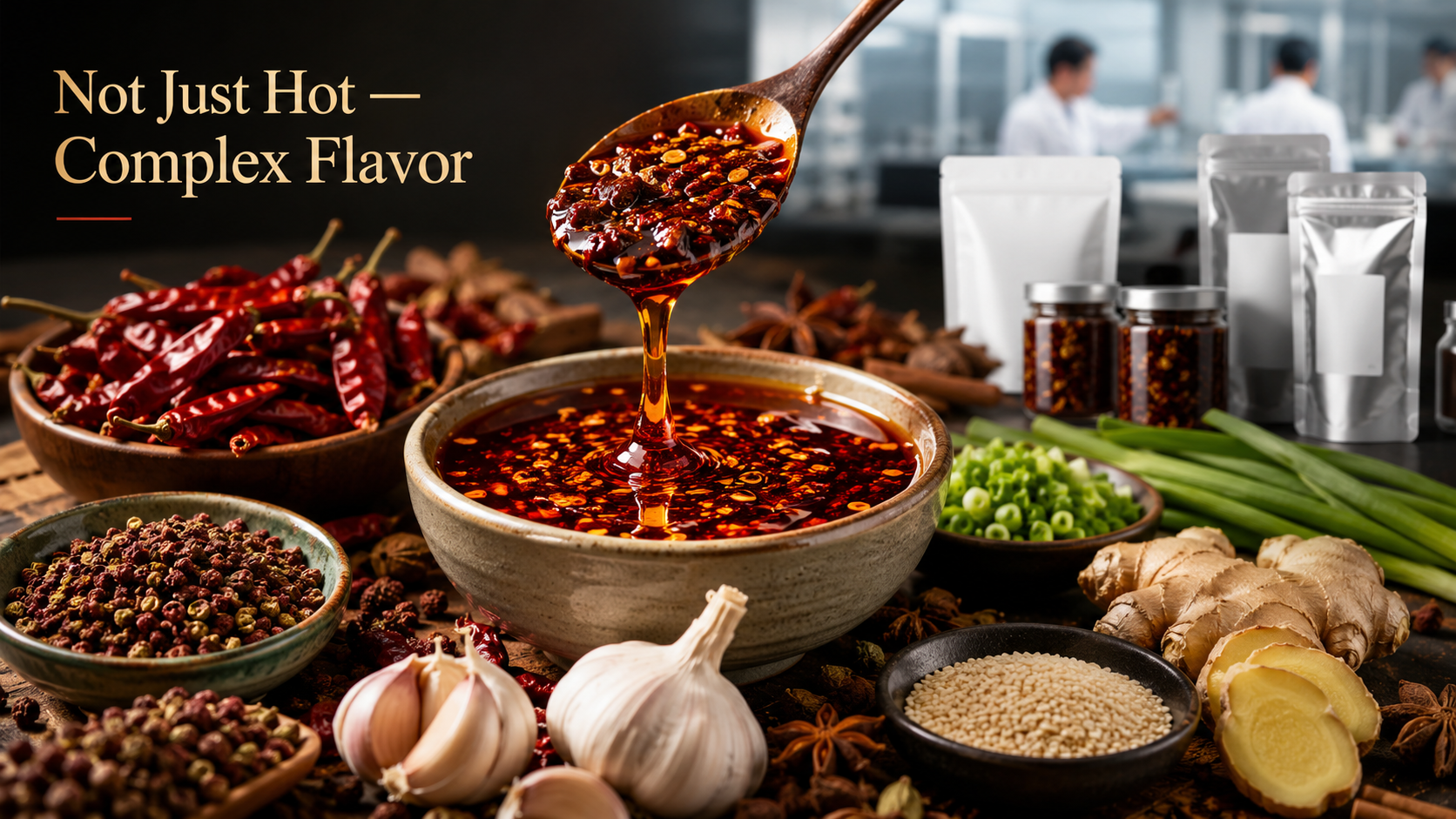
Your Customers Want Spicy Food, But Not Just “Hot” — They Want Complex Flavor
Spicy food is becoming more popular in many international markets.
But here is one important thing many food brands may overlook:
Consumers are no longer looking for “just hot”.
They are looking for spicy products with more depth, aroma, and memorable flavor.
This is where Sichuan-style seasonings can bring real product value.
Sichuan flavor is not only about chili heat. It is a combination of different taste layers:
Numbing, spicy, savory, aromatic, slightly smoky, rich, and long-lasting.
That is why Sichuan-style sauces and seasonings are being used in more product categories, such as:
- Hot pot base
- Chili oil
- Dry pot sauce
- Stir-fry sauce
- Spicy noodle sauce
- BBQ seasoning powder
- Ready-to-eat meal seasoning
- Private label sauce products
For food brands, importers, and distributors, this creates a strong opportunity.
A good spicy product should not only make consumers feel “hot”.
It should make them want to eat again.
Why complex flavor matters
In many markets, hot sauce products are already very common.
If a new brand only offers “extra hot” or “super spicy”, it may be difficult to stand out.
But when a sauce has a more complex flavor profile, it becomes more memorable.
For example:
Chili oil can bring aroma and color.
Sichuan peppercorn can bring a numbing sensation.
Fermented ingredients can add depth and umami.
Garlic, ginger, sesame, spices, and roasted chili can create a stronger aftertaste.
This is why Sichuan-style seasoning is suitable for brands that want to develop products with a more distinctive Asian flavor identity.
Localization is also important
However, Sichuan flavor cannot always be copied directly from the Chinese market.
Different countries have different taste preferences.
Some markets prefer strong heat.
Some prefer mild spicy flavor.
Some prefer more garlic aroma.
Some care more about clean labels, Halal requirements, or packaging convenience.
That means a successful spicy sauce product should be adjusted according to the target market.
For OEM and private label projects, we usually need to consider:
- Target country
- Consumer spicy tolerance
- Product format
- Retail or foodservice use
- Packaging size
- Shelf life requirement
- Label and certification needs
- First trial order quantity
A good OEM supplier should not only provide a product.
They should help the customer turn a flavor idea into a market-ready product.
Sichuan flavor can be more than one product
Many people think Sichuan seasoning only means hot pot base.
Actually, it can be developed into many different product directions:
For retail brands:
bottled chili oil, cooking sauce, noodle sauce, dipping sauce
For restaurants and foodservice:
dry pot sauce, stir-fry sauce, hot pot base, BBQ seasoning
For food manufacturers:
seasoning packets for instant noodles, frozen meals, ready meals, snacks, and plant-based foods
This flexibility makes Sichuan-style seasoning a good choice for importers and private label brands looking for new product opportunities.
Final thought
Spicy food is not only about heat.
The real opportunity is in creating a product with flavor layers, local market fit, stable quality, and strong repeat purchase potential.
For brands planning to develop a private label spicy sauce or Sichuan-style seasoning product, the key question is not:
“How spicy can we make it?”
The better question is:
“What kind of spicy flavor will make our customers come back again?”
What kind of spicy flavor is most popular in your market — mild, numbing, smoky, garlicky, or extra hot?